Skip to content

The cut happened a moment ago. There is blood on the towel, your hand is throbbing, and one question keeps coming back: do I need stitches? A cut that needs closing by a doctor looks different from a scrape that heals on its own, and the signs are easy to check once you know them. This post walks through the signs that a cut needs stitches, the situations that turn a cut into an emergency, and the steps that keep you safe until a doctor sees it. Reliant Emergency Room is a freestanding emergency room in Corpus Christi, open 24 hours a day, 7 days a week, and its services page lists treatment for "simple and complex lacerations." A cut at midnight or on a Sunday gets the same attention as one on a weekday morning.
How Do I Know If I Need Stitches? 6 Signs to Check
Run through these six signs while you hold a clean cloth on the cut. One yes is enough reason to have a doctor look at it.
The Cut Is Deep
Once the bleeding is controlled enough to see the wound, look at how far down it goes. A cut that is more than a quarter inch deep is one a provider should see right away, since stitches may be needed. If you can see a gap rather than a thin line, the cut has gone past the top layer of skin.
The Cut Is Long
Length matters because a longer cut has more edge that has to meet in order to heal. Sources vary on the exact cutoff, and a doctor makes that call by looking at the wound. A cut that runs well past the width of a thumbnail deserves a closer look.
The Edges Gape or Will Not Stay Together
Gently press the sides of the cut toward each other with clean hands. Edges that stay together without effort are a good sign. Edges that spring apart, or that look like open lips, tend to heal slowly and leave a wider scar when nothing holds them in place.
Fat, Muscle or Bone Is Visible
Yellow, bumpy tissue is fat. Dark red tissue with a grain to it is muscle. White or pale material at the bottom of a wound can be bone. Seeing any of these means the cut goes deep, and it needs a doctor.
The Edges Are Jagged
Cuts from a clean blade tend to have smooth edges. Cuts from glass, broken metal, a saw or a fall onto rough ground can leave ragged edges and torn skin that do not line up neatly. Those wounds often need cleaning and careful closure.
The Cut Sits Over a Joint
Knuckles, knees and elbows bend all day. Skin over a joint pulls open every time you move, so a cut there can reopen even when it looks small.
A shallow cut with smooth edges that stays closed on its own and stops bleeding with a few minutes of pressure looks very different from the six signs above. When you are unsure which group your cut belongs to, have a doctor look at it.
Do I Need Stitches If It Stops Bleeding?
Possibly. Bleeding and depth are two separate things. A clot can form over a cut that is deep, long or gaping, and the clot says nothing about how far the cut goes. A provider should see a wound that is large or deep even when the bleeding is not severe. A cut that has stopped bleeding still needs the six checks above: depth, length, edges, what you can see in the wound, jagged borders and location over a joint.
A cut that has closed up with a clot can also reopen the next time you move the area, which is why a gaping cut that looks calm can bring you back to the same question an hour later.
Some bleeding signals tell you to move faster. Bleeding that keeps going through steady, direct pressure is one. Blood that soaks through a dressing and then through the next one is another. Pressure for about 10 minutes that fails to slow the bleeding is the point where the guidance says to call 911.
Blood that spurts in time with the pulse points to an injured artery. That is a call to 911 right away, and the call comes before any drive to the emergency room.
When a Cut on Your Finger or Hand Needs Stitches
Fingers and hands get their own section because the skin there is thin and moves constantly, and it sits right over tendons, nerves and blood vessels. A small-looking cut can reach structures that the eye cannot see.
Cuts over a knuckle reopen more often than cuts almost anywhere else, since every bend of the finger pulls on the edges. A cut there that gaps even slightly when you bend the finger is a strong candidate for stitches.
Some signs say the cut has gone deeper than the skin. The common signs of a flexor tendon injury include a cut on the palm side of the hand, wrist or forearm, being unable to bend one or more joints of a finger, pain when you try to bend it, tenderness along the palm side of the finger, and numbness in the fingertip. When a tendon is cut, its ends pull apart and cannot heal on their own, and nearby nerves and blood vessels may be cut as well.
A doctor checks these structures by moving and testing the finger, which can only happen in person. If your finger cut matches any of these signs, get it seen promptly at the emergency room. The same goes for a cut on the hand where you cannot fully close your fist or feel all of your fingertips.
Cuts That Need Emergency Care No Matter How Small They Look
Some cuts need a doctor whatever their size. Go to the emergency room for a cut with any of these features:
- It is on the face, eyelid, lip or genitals.
- It came from an animal or human bite. Up to 19% of bite wounds become infected, and cat bites carry the highest rates.
- It is a puncture, or came from a rusty, dirty or contaminated object, including a fishhook.
- Something is stuck in the wound. About one-third of foreign bodies such as dirt, wood or glass can be missed on first inspection, and imaging may be needed to find them.
- You have numbness or loss of movement beyond the cut.
- You have diabetes, which raises the chance of infection.
- You are unsure when your last tetanus shot was. The CDC's wound guidance sets different timelines for clean wounds and dirty ones, and a doctor can sort out which applies to you.
- The cut was fine at first and later turns red, warm, swollen, streaked, or starts to drain.
Some injuries go straight to 911. These include deep, bleeding wounds to the neck, chest, abdomen or eye. Severe symptoms with any cut, such as fainting, dizziness or trouble breathing, belong in this group as well.
How Long Do You Have to Get a Cut Stitched?
Sooner is better, and the reason is simple. A wound that waits collects bacteria, and the edges start to dry and settle. Doctors prefer to close a wound while it is fresh.
Time limits are looser than many people think. Studies have not found a single "golden period," and clean wounds may be closed up to 18 hours after injury, with head wounds up to 24 hours. Those windows apply to clean cuts from clean objects. Dirty cuts, bites and wounds with something lodged inside have a shorter window, and a doctor decides each case on its own details.
Some wounds are left open on purpose. When a cut is contaminated, closing it right away can trap bacteria inside. A doctor may clean the wound thoroughly first and choose a different time or method for closing it.
None of this is a reason to wait until morning for an answer. At 11 p.m. the question "is it too late?" has a quick answer from a doctor who sees the wound, and the sooner that happens, the more options are available.
What to Do on the Way to the ER
A few steps keep you steady until a doctor takes over.
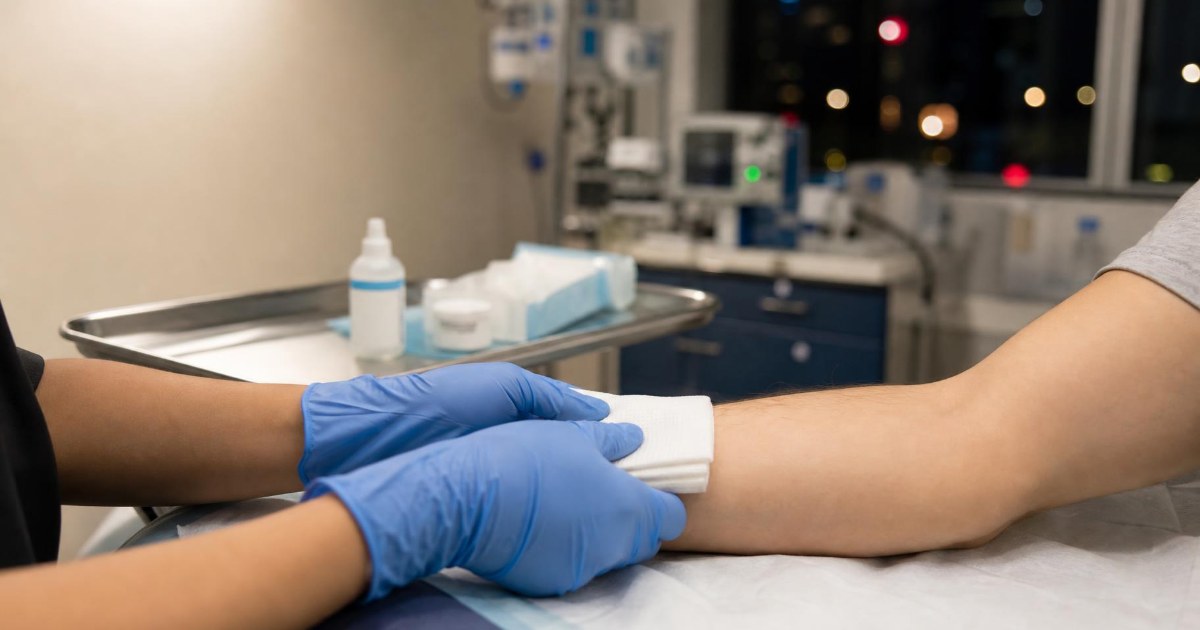
Press a clean cloth firmly on the cut and hold it there. Keep the pressure steady, and resist the urge to lift the cloth to check, since lifting breaks up the clot that is forming. When blood soaks through, lay more cloth on top of the first layer and keep pressing.
Raise the injured part above the level of your heart when you can. A cut hand or forearm rests on a pillow or the back of a car seat.
If something is stuck in the wound, leave it exactly where it is. Pulling it out can cause more bleeding and more damage, and the doctor will remove it safely.
Hold off on food and drink, especially for children. If sedation or numbing for a larger repair is needed, an empty stomach makes that easier.
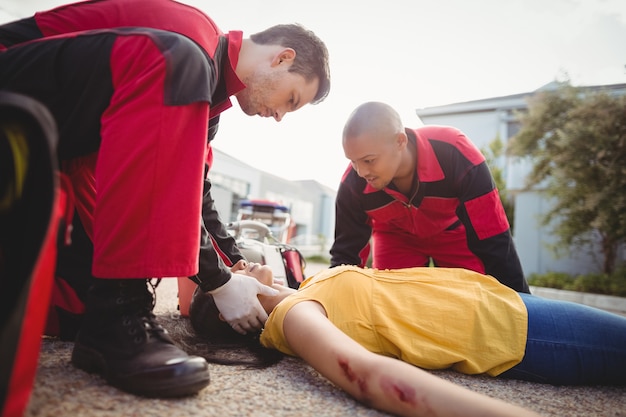
Some situations call for 911 rather than a drive. Bleeding that will not slow, blood that spurts, or an object lodged in the wound all fit this group. Paramedics can start care on the way.
Stitches, Staples or Skin Glue: What to Expect at the ER
Once you arrive, the doctor checks the wound, numbs the area, cleans it, and decides how to close it. Reliant Emergency Room treats simple and complex lacerations around the clock, and digital x-rays and CT scans are on site when a doctor needs to look for something inside the wound.
Closure comes in a few forms. Stitches suit cuts that gape or sit where skin moves. Staples are often used on the scalp, where the skin is thick and the closure needs to be quick. Adhesive strips and skin glue work for shallow cuts with edges that meet easily and are under little tension. The doctor picks what fits your cut.
Most people ask whether stitches hurt. The numbing step comes first, so what you feel is mostly pressure and tugging. One patient review on the site describes getting stitches "very quick+pain free."
Closing a wound matters because a gaping cut left open takes longer to heal, carries more risk of infection and tends to leave a wider scar.
Stitches that do not dissolve come out after a set number of days that depends on location. Typical timing is 3 to 5 days on the face, 7 to 10 days on the scalp and arms, 10 to 14 days on the trunk, legs, hands and feet, and 14 to 21 days on the palms and soles. A clinician handles the removal.
When Urgent Care Is Closed, a Definite Answer Is Still Available
When it is unclear whether a cut needs stitches, an emergency room visit gives you a definite answer. A doctor looks at the depth, tests the movement, checks for anything left inside the wound and decides how to close it. That is a better way to spend a worried evening than staring at a bandage.
Urgent care hours end at night and on weekends, and cuts do not keep those hours. Reliant Emergency Room on Saratoga Blvd in Corpus Christi is open 24/7. It is a freestanding emergency room with experienced physicians on location, an on-site certified lab, digital x-rays and CT scans, and a focus on reduced wait times. The team treats simple and complex lacerations, so a small cut and a deep one both have a place to go.
If you are on the fence about a cut tonight, contact the Reliant Emergency Room team and come in so a doctor can look at it.
This content is provided for general informational and educational purposes only and should not be considered medical advice, diagnosis, or treatment. Medical needs vary from person to person. If you have questions or concerns about your health, symptoms, or treatment options, consult a qualified healthcare provider for guidance specific to your situation. If you are experiencing a medical emergency, call 911 or seek emergency medical care immediately.